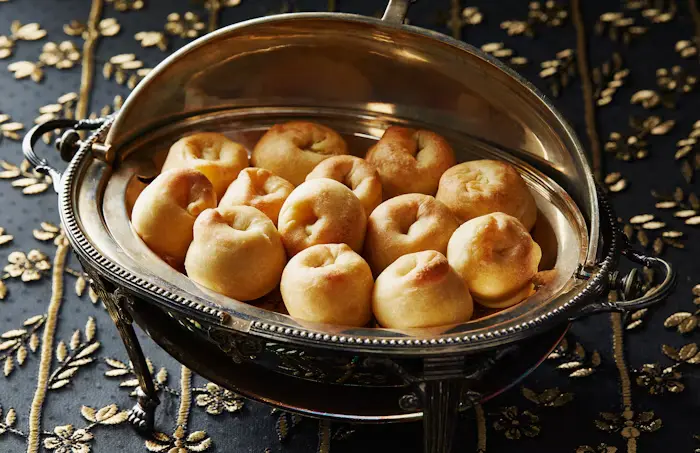
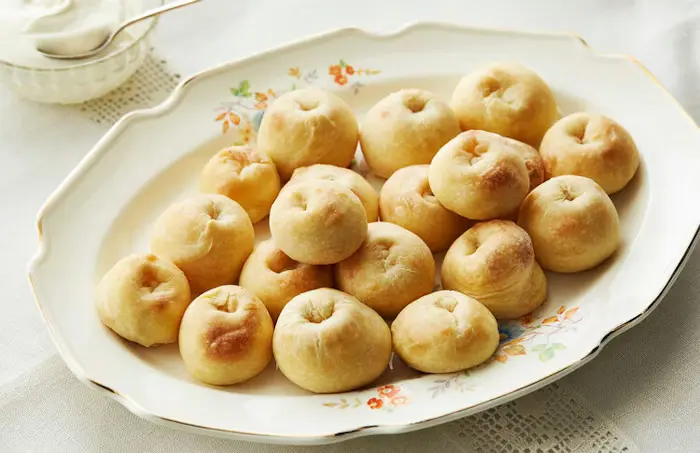
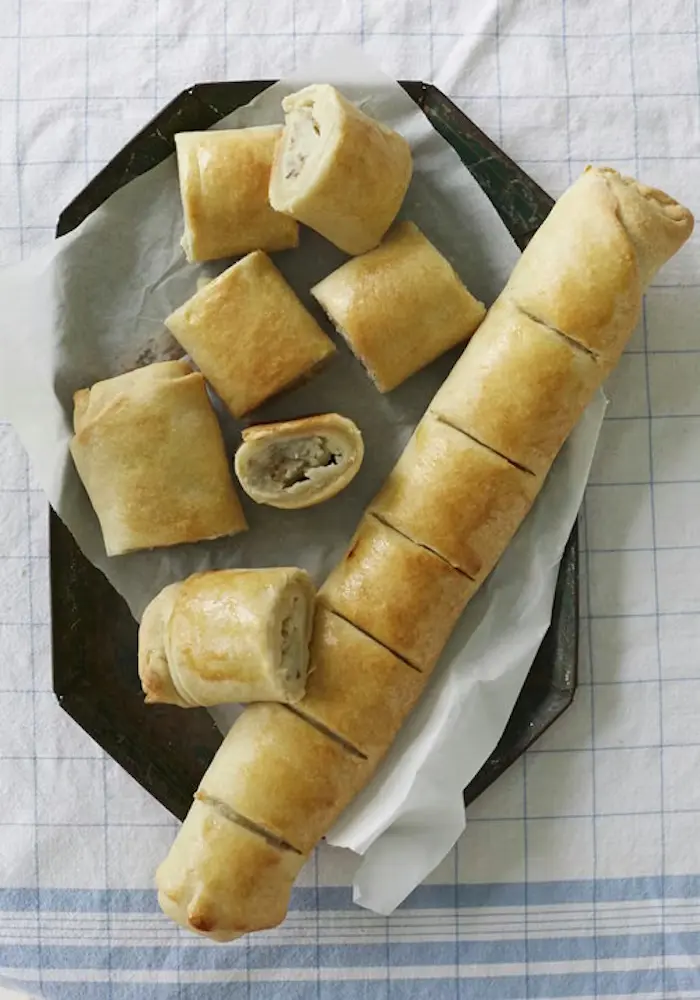
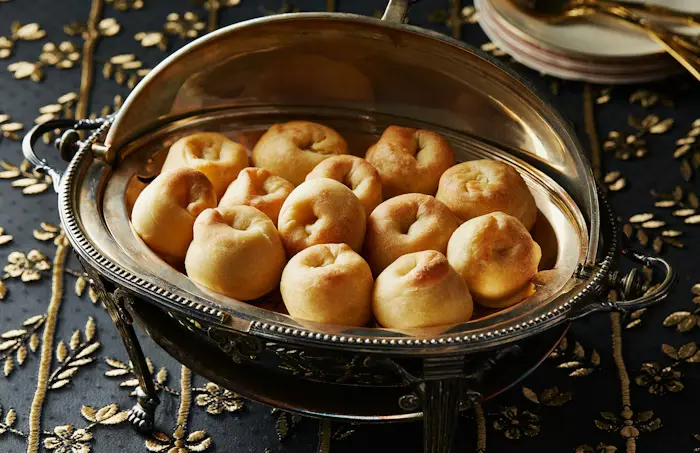
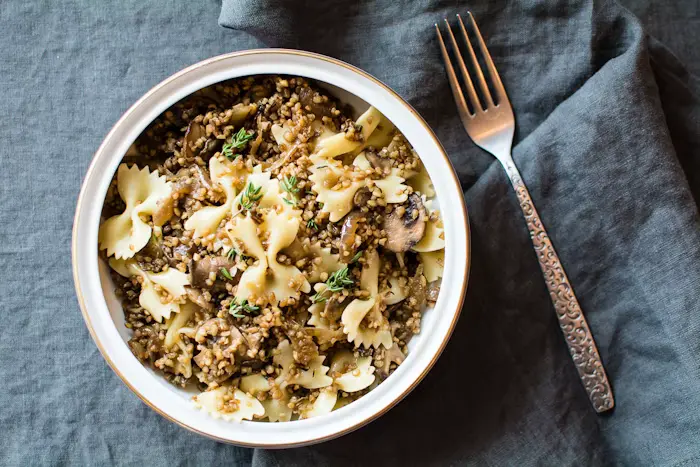
“Kasha feels like a secret of mine,” explains Eli Charm “[It] has been integral to my experience and consciousness as a diasporic American Jew.” Growing up as the youngest of seven children in the religious town of Monsey, New York, kasha varnishkes laced with lots of caramelized onions was part of the Shabbat menu almost every week. And their family often picked up kasha knishes — an iconic Ashkenazi baked good that's often filled with potatoes — at a Jewish grocery store.
In their late 20s, Eli moved to a town of just over 200 people in Utah to cook at the acclaimed seasonal restaurant Hell’s Backbone Grill & Farm. While there, “I really missed being surrounded by the Jewish food around New York City,” they say. “I was feeling culturally homesick.” Their parents sent them a package of kasha and from that Eli made kasha varnishkes with fermented mushrooms for a potluck dinner for the team at the restaurant. They also started making their own take on the baked goods they grew up with, like kasha knishes, babka, and bourekas in an earthen oven.
Today, Eli lives in New York City, where they no longer need to have the buckwheat groats shipped to them. “When I make a Jewish meal, buckwheat is always scattered throughout it in different forms,” Eli says — whether it’s buckwheat blintz skins, the knishes, or something else.
“There's a phenomenological element to cooking and eating kasha for me; I imagine the shared experience of my ancestors enjoying it just like I do today. It's not a sexy food, but it is a food that connects me to my ancestral past.”
If it’s your first time making knishes, it can take a bit of practice. Follow Eli’s technique for shaping: Once you have your log, crimp it every three inches. Then, twist the log at the crimped parts before cutting and placing them facing up on the baking sheet. Check out the video tutorial below!