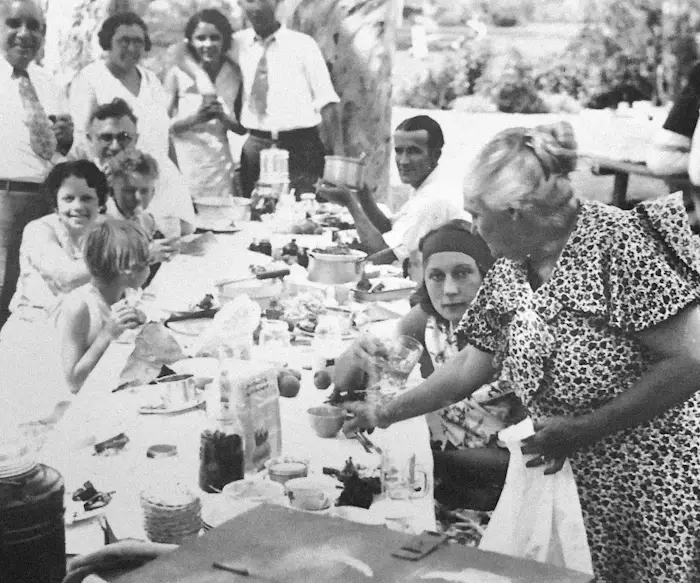
This Creole gumbo recipe comes from chef and former JFS culinary manager Lizzy Cooper’s great-great-grandmother, Mathilda Landry Frilot, who lived in Frilot Cove, Louisiana — a community of Free People of Color established before the Civil War in 1860. The dish features a deep, dark roux as its base, with tender beef, salami, and white rice.
Lizzy grew up in an interfaith home with a Jewish mother and a Catholic father with Creole roots, a heritage that shaped both her cultural identity and culinary sensibilities. After her family moved to Los Angeles in 1919, the gumbo remained central to gatherings and was passed down through generations. Lizzy learned the recipe from her Grandma Betty and has adapted it to make it kosher — by replacing the traditional German hard pork salami with beef salami — while preserving the dish’s original flavor and spirit.
Cooking note: A mixture of flour and fat cooked slowly, called a roux, is the heart and soul of this gumbo. Slowly browned to a deep, dark color, it builds rich, nutty flavor and thickens the stew. The darker the roux, the more depth and complexity your gumbo will have, so patience is key. Remember: the roux is the secret to the flavor!
This recipe calls for gumbo filé powder which is a traditional seasoning used in Louisiana Creole and Cajun cooking, made from dried and ground sassafras leaves. It’s added at the end of cooking gumbo to thicken it slightly and give it a distinctive earthy flavor. Look for it at well-stocked supermarkets, online retailers, or specialty spice shops.
Read more about Lizzy and her family in "A Gumbo That Bridges Faith, Family, and Forgotten Histories"